
OUR SERVICES
REDUCING POVERTY

With limited education, intense social stigma and perhaps a child to care for, young people are left with few options.
Tanzania is known for its dramatic landscapes and stunning wild animals, but it is also a country of abject poverty: 68% of Tanzanians lives on less than USD 1.25 per day, and the average Tanzanian earns just USD 2.19 in a single eight-hour workday (Source: Trading Economics). Inadequate education, lack of infrastructure and widespread corruption contribute to the nation’s extreme poverty.
Against such a backdrop, many Tanzanian adolescents drop out of secondary school early, especially girls and young women due to pregnancy. With limited education, intense social stigma and perhaps a child to care for, these young people are left with few options.
We have established the below training to girls and young women (ages 15-23) and adolescent boys (ages 15-18) living in the Ilemela and Nyamagana districts of Mwanza Region who dropped out of secondary school. Combined, these are designed to reduce joblessness and dependency so as to live a life free of coercion, discrimination and violence
WHAT WE DO
01. Digital Literacy
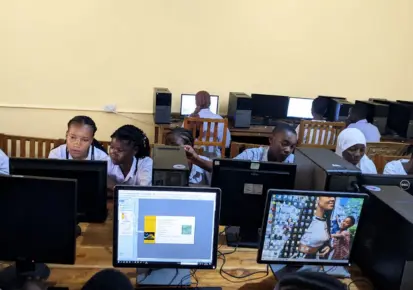
Topics covered: Introduction to computers, Computer Google Apps, Al tools and Designing tools
Digital Literacy Training is the first project focused on helping these young people in our community. Each year, we visit more than 20 wards in Mwanza and recruit 100 young people, with a special preference for young mothers, to attend a 4-month computer literacy course – free of charge to participants.
We receive 2 batches per year of 50 young people each. (Our current funding and limited resources prevent us from sponsoring more than 100 young people per year.) Computer Literacy Training accomplishes two things:
(1) it provides these young people with a specific and needed skill set that enables them to obtain employment in the secretarial field, and
(2) it boosts the self-confidence and sense of purpose in their lives. Instead of sitting at home and wondering where their life is headed, these young people wake up each morning knowing they are learning a new and valuable skill – one that will further empower them economically.
02. BUSINESS SKILLS TRAINING
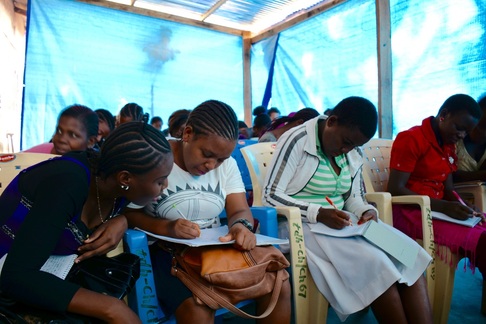
Skills Trained: 1. Overview of employment and entrepreneurship. 2. Drafting cover letters and curriculum vitae (C.V.). 3. How to choose good business ideas. 4. Assessing business needs and forecasting start-up costs. 5. Setting the prices of products and services. 6. Financial management. 7. Understanding customers and competitors. Record keeping. 8. Monitoring and evaluation. 9. Marketing. 10. Customer service
We started a second initiative to equip young people with the knowledge and tools for how to apply for and attain employment, and how to choose, plan and run a successful enterprise. The ultimate goal is to empower young people, with a special preference for young mothers, to attain economic emancipation and rise out of poverty through strategically planned income-generating activities, enabling them to joyfully and confidently live a full and dignified life.
Instruction leverages a dialogue education model with frequent group activities and creative exercises. But it’s not just about what happens in the classroom. Each participant conducts market research in order to understand the needs in his or her community, along with the current competitive landscape. By the end of the project, each participant completes at least the following activities:
- Sixty hours of business training, including how to become employed or self-employed
- Creation of actionable group business plans, including how to raise requisite capital
- Drafting of cover letters and resumes to be used in actual job applications
- Business exam to evaluate comprehension of the material covered
- Leadership workshop to build real-world management capabilities
- Membership in a saving and loaning group to better achieve professional goals
- Pre and post-training questionnaire to measure the impact of the project
03. SECONDARY SCHOOL

Subjects taught: Biology. Chemistry. Civics. English. Geography. History. Kiswahili. Mathematics. Physics
Despite our efforts to help young people run from dependence and unemployment issues still there are number of young people seeking employment who were left out of the job market because they lacked a Form IV secondary school certificate.
With this understanding in mind, EBLI – in partnership with the community-based organization (CBO), Upendo Daima, – resolved to open a secondary education program known locally as “QT” (Qualifying Test).
This latest initiative equips young people, with a special preference for young mothers, with 4 years of secondary education in just 2 years, enabling them to sit for the national Form IV examination for a chance to attain their certificate, and ultimately secure a dignified job.
04. Environmental and Climate Change Awareness
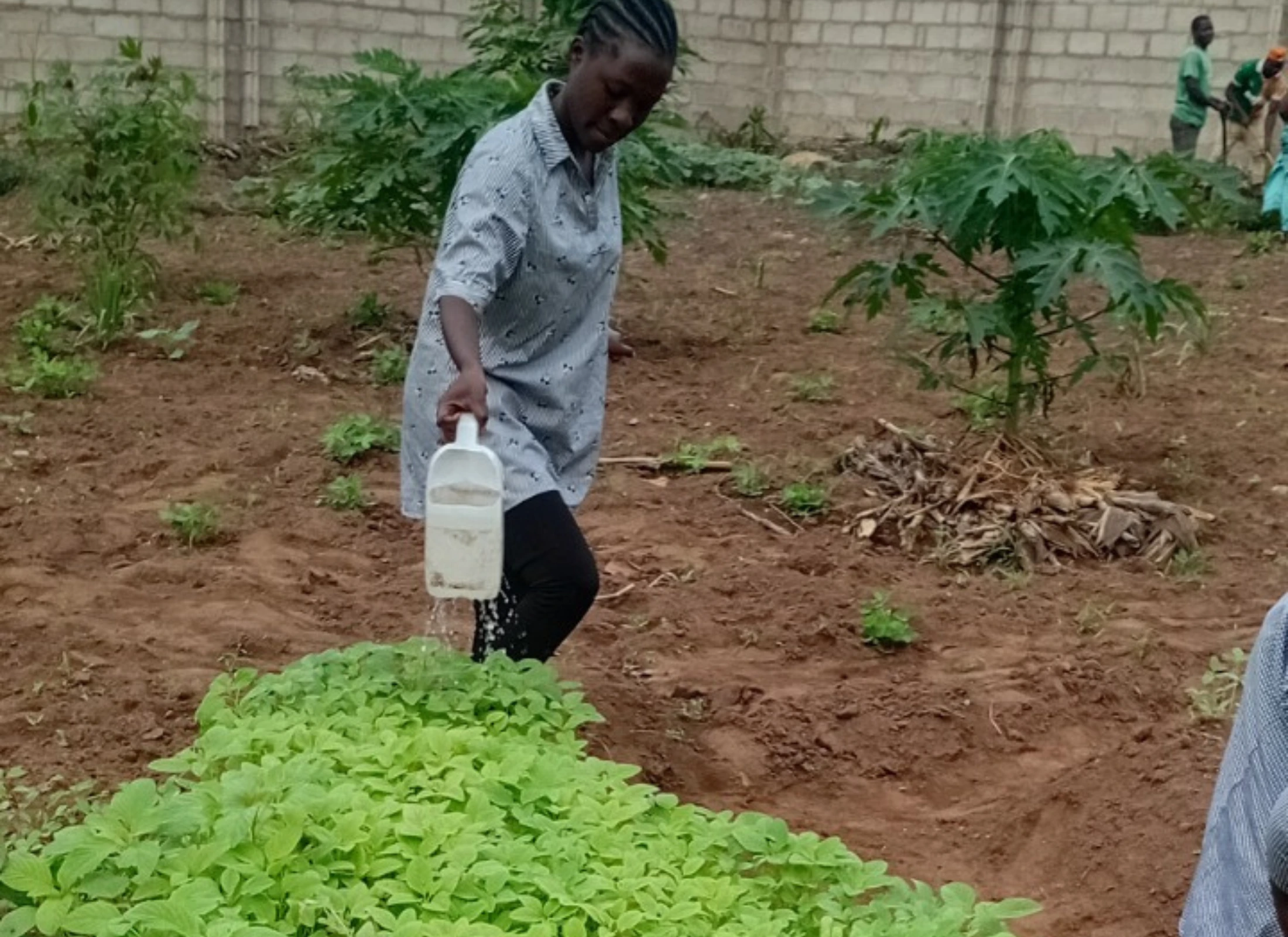
Protecting our environment today for a sustainable tomorrow.
This activity equips young people and young mothers with the knowledge and practical skills to understand and respond to environmental and climate change challenges.
Participants learn about the causes and effects of climate change, environmental conservation, and sustainable living practices. The sessions also promote responsible waste management, tree planting, clean cooking practices, and home gardening as simple, everyday solutions that improve both environmental and household well-being.
Using participatory approaches such as group discussions, real-life demonstrations, and digital learning tools, we ensure that knowledge is practical, engaging, and easy to apply.
Through this activity, participants are empowered to take action, adopt eco-friendly practices, and become champions of environmental protection in their communities.